What we gain, what we lose, and the real skill AI demands
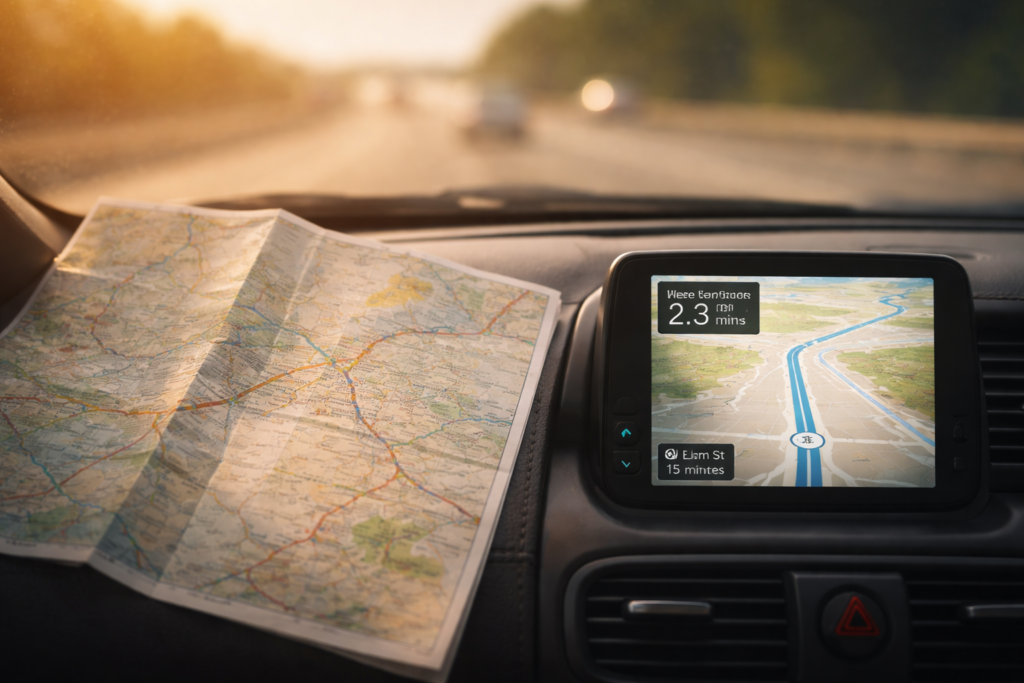
My mom can’t read a paper map anymore.
She used to be great at it. On road trips in the ’90s, she’d navigate while my dad drove, tracking where we were, planning routes, calling out turns. Then GPS happened. Now if her phone dies, she’s lost.
Is that bad? I’m not sure. She can get anywhere now with almost zero stress. She doesn’t miss map reading. But the skill is gone.
That’s what’s happening with AI except faster, and across far more domains.
What We’re Getting Better At
Let’s start with the good stuff, because it’s real and it matters.
Prompt literacy.
We’re learning how to talk to AI to get useful results. How to frame questions, provide context, iterate on responses. This didn’t exist five years ago. Now it’s becoming a core communication skill.
Judgment under acceleration.
Working with AI forces you to evaluate constantly. Is this right? Is this useful? Is this actually what I asked for? You get faster at spotting gaps, errors, and confident nonsense. That judgment doesn’t stay confined to AI. It leaks into everything else.
Delegation.
Knowing what to hand off and what to keep is a real skill. Not everything should go to AI. Learning where that boundary is and how to move it deliberately is management without a team.
Iterative thinking.
AI collaboration is inherently iterative. You try something, see what comes back, adjust, try again. That loop trains refinement. You get better at knowing when something needs another pass and when it’s done.
These are genuine cognitive upgrades. Working with AI doesn’t make you dumber. It makes you different.
What We’re Losing
But yeah, we’re losing things too.
Mental math.
Most people already don’t calculate tips or do arithmetic by hand. That skill is fading fast.
Memorization.
Phone numbers, directions, facts. We used to carry them. Now we look them up. Our memory muscles aren’t getting much exercise.
Certain problem-solving paths.
When answers are always available, we skip the long way. Sometimes the long way is inefficient. Sometimes it’s where understanding actually forms. That struggle is disappearing.
Handwriting and spelling.
These were already declining, but AI accelerates it. When text is always corrected or completed for you, precision stops being something you actively maintain.
Starting from blank.
This one matters more than it sounds. Creating something with no scaffold – no reference, no draft, no AI assist – just you and uncertainty. We’re getting less comfortable there. Editing is easier than originating, so we default to editing.
That changes how creativity feels.
Is This Bad?
It depends.
We went through this with calculators. People panicked. Mental arithmetic declined but we gained the ability to do far more complex math because we weren’t stuck in calculation mechanics.
Same with GPS. Navigation skills eroded, but people gained the freedom to go places they’d never risk before.
Every tool trade-off looks like this. You lose something. You gain something. Often the gain is bigger, but not always.
The real question isn’t whether we should stop using AI. That ship sailed. The question is which skills matter enough to preserve, and how we preserve them intentionally.
New Cognitive Patterns
Something deeper is shifting.
We’re starting to think in systems instead of steps. The question isn’t “How do I do this task?” but “How do I set up a system where this gets done well?” That’s a fundamental change in thinking.
We’re getting better at editing than creating. Turning a rough AI draft into something solid can be faster than starting from scratch. That isn’t laziness. Editing is a craft. But it’s a different craft than origination.
We’re also learning how to think collaboratively with non-humans. You develop a sense for what the AI is good at, what you’re good at, and how to combine those strengths. That kind of collaboration didn’t exist before.
And we’re developing a new literacy: pattern recognition for AI behavior. You can feel when it actually understands you versus when it’s guessing. When it’s confident versus when it’s bluffing. That intuition becomes second nature.
The Meta-Skill
The most important skill isn’t prompt writing.
It’s knowing when to use AI and when not to.
Some things benefit from AI: research, drafting, brainstorming, code scaffolding, data analysis, pattern discovery.
Some things suffer with AI: deep learning, first-time understanding, creative breakthroughs born from constraints, and skills that only develop through struggle.
The people who thrive aren’t the ones who use AI for everything or reject it entirely. They’re the ones who can switch modes. AI here. Human-only there. Collaboration when it makes sense.
That discernment is the real upgrade.
How to Stay Sharp
If you want to keep certain capabilities, you have to practice them without assistance.
Want to keep your writing skills? Write without AI sometimes. Not everything needs to be optimized.
Want to stay good at problem-solving? Work through problems the long way occasionally. Let yourself struggle. That’s where learning sticks.
Want to maintain memory? Memorize things on purpose. Poems. Speeches. Anything.
Want to stay creative? Start from blank now and then. No scaffolding. No drafts. Just you and the mess.
This isn’t about rejecting AI. It’s about being intentional. You wouldn’t train with a machine that did half the lift for you and expect to stay strong. Same principle.
The Balance
We’re in a transition period, figuring out which skills we can let go of and which ones we want to protect.
Some losses are fine. I’m okay not reading paper maps. I’m okay not doing long division by hand.
Some losses hurt. Losing patience with hard problems. Losing the ability to think deeply without external input. Losing the quiet satisfaction of building something entirely yourself.
The trick is staying conscious. Noticing what you’re trading away. Deciding whether the trade is worth it.
Because co-evolution isn’t about becoming better or worse.
It’s about becoming different.
And different is only good if you’re choosing it deliberately.
Leave a Reply